Wheat, Gluten, and A Secret Third Thing?
Parsing food allergies around wheat and gluten kind of feels like one of those deductive reasoning word problems from a dreaded high school standardized test. Some folks have a wheat allergy but can tolerate gluten, some can’t tolerate gluten but don’t have celiac disease, some people have celiac disease and can eat deglutenized wheat… Let’s detangle the underlying biological mechanisms to understand the differences.
Detangling the Gluten Web
Wheat Allergy: This is an immune response, either in a classic rapid way, releasing histamines that spark symptoms like hives or breathing trouble, or in a slow way, with long-term inflammation of the esophagus and stomach. Think of a wheat allergy as a case of mistaken identity. The body incorrectly labels specific proteins that make up wheat (and there are more than just gluten!) as harmful invaders, causing an inflammatory response. If you have a wheat allergy, you aren’t just avoiding gluten; you are avoiding wheat specifically. Rye or barley, which contain gluten but not the same wheat proteins, might actually be safe for you. 1,2
Celiac Disease: This is a chronic autoimmune disorder specifically tied to the gluten protein (found in other grains like barley and rye, which may be fine alternative grains for those with a wheat allergy, but not for folks with gluten issues). When gluten enters the system, the immune system reacts by targeting the body itself, specifically the villi that make up the lining of the small intestine. These are the tiny, finger-like projections responsible for absorbing nutrients from your food. When the immune system breaks down this specialized lining, it can lead to malabsorption of nutrients. If you can’t get the nutrients you need out of your food, all kinds of problems start popping up. There is often a genetic component of this disease. 2
Non-Celiac Gluten Sensitivity (NCGS): This is the most frustrating category for both patients and doctors because we don’t have clear biomarkers for this, like we do the other two. You might be placed in this category when celiac disease and wheat allergy have been eliminated as causes, but you still feel awful when you eat wheat. We know it’s real because removing gluten from the diet often eliminates the symptoms. Some researchers are now suggesting that for many people in this category, it's high-FODMAP contents, not gluten proteins, that are the problem. FODMAPs are a group of fermentable carbohydrates found in wheat that can be difficult for some people to digest. (Don’t worry, we can get into FODMAPs in a future post.) The science is still being sorted out, so "gluten sensitivity" is used as an umbrella term that may shift as we learn more. 3,4
The Knead for Wheat-Free LOAM
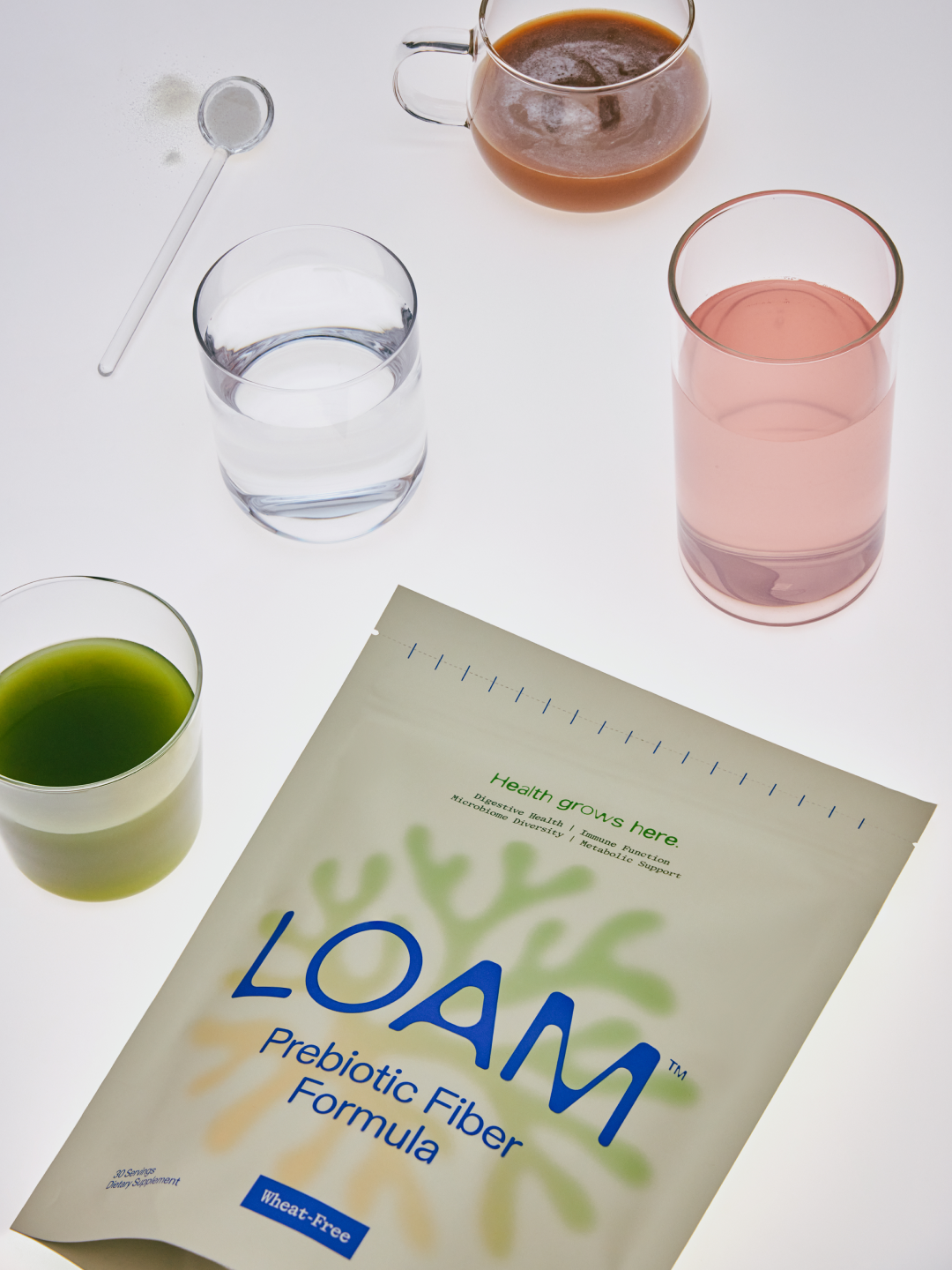
Our original LOAM prebiotic fiber formula contains six prebiotics, including wheat fiber. Soluble wheat fiber has been shown to support healthy blood sugar and appetite regulation. 5 This ingredient, of course, contains wheat (duh!). But it also undergoes a process to remove its gluten protein, so the finished product tests under the FDA’s gluten-free threshold of 20 parts per million (ppm). Wheat, but basically deglutenized. This original formula works for most folks who have problems with gluten.
But some folks are so sensitive to gluten that 20ppm is still too much. And other folks have that aforementioned allergy to wheat itself, not just the gluten protein. But great news: for the folks out there for whom the original LOAM formula won’t work, there is the new, wheat-free prebiotic fiber formula that completely removes that wheat fiber ingredient, but still contains 10g of fiber per serving. Works just like the original formula, with that tasteless, textureless that allows you to swirl it into anything from wheat-free muffins to your morning coffee to a plain glass of water.
Making fiber more accessible is our whole thing, and now there’s a whole new group who can close their fiber gap.
We made a nifty flow chart to make it super easy, but always talk to your doctor if you aren’t sure:

Rapid-Rise Rapid-Fire Questions
What's the difference between a wheat allergy and celiac disease?
A wheat allergy is an immune reaction where your body treats wheat proteins as a threat, often causing fast symptoms like hives. Celiac disease is an autoimmune condition where gluten causes your body to attack and damage your own small intestine lining.
Is gluten intolerance the same as celiac disease?
No. Celiac disease is a specific autoimmune condition that causes intestinal damage. Gluten intolerance (or sensitivity) is often less severe, though it shares similar symptoms like bloating and fatigue.
Can you have a gluten problem without having celiac disease?
Yes. This is called Non-Celiac Gluten Sensitivity (NCGS). People with this condition experience symptoms after eating gluten but do not test positive for celiac disease or a wheat allergy.
Does wheat-free mean gluten-free?
Not always. A product can be wheat-free but still contain barley or rye, which both contain gluten. Always check the label and consult with your healthcare practitioner if you have a medical condition.
Does gluten-free mean wheat-free?
Not always. A product can be gluten-free (or contain trace amounts that are under FDA’s gluten-free threshold of 20ppm) but still contain deglutenized wheat. Always check the label and consult with your healthcare practitioner if you have a medical condition.
How do I know which one I have?
For this, you’ll have to work with your doctor to find out.
The Bottom Line
Wheat allergies, gluten sensitivities, and celiac disease have unique biological mechanisms and responses. LOAM now has this group’s fiber needs covered between our two unique formulas. The more we understand the intricate nuances of how different bodies work, the more folks we can help on their gut health (and whole body health) journey.
REFERENCES:
- Mayo Clinic. (2018). Wheat allergy - Symptoms and causes. In Mayo Clinic. https://www.mayoclinic.org/diseases-conditions/wheat-allergy/symptoms-causes/syc-20378897
- Catassi, G., Sferra, F., Catassi, C., & Lionetti, E. (2024). The role of microbiome in the development of gluten-related disorders. Best Practice & Research Clinical Gastroenterology, 68, 101918. https://doi.org/10.1016/j.bpg.2024.101951
- Cárdenas-Torres, F. I., Sierra-Sánchez, A., Hernández-Camacho, J. D., & Meza-Gordillo, R. (2021). Non-celiac gluten sensitivity: An update. Medicina, 57(6), 526. https://doi.org/10.3390/medicina57060526
- Besiekierski, J. R. (2025). Non-coeliac gluten sensitivity. The Lancet, 405(10472), 1533-1544. https://doi.org/10.1016/S0140-6736(25)01533-8
- Slavin, J. L., Savarino, V., Paredes-Diaz, A., & Fotopoulos, G. (2009). A review of the role of soluble fiber in health with specific reference to wheat dextrin. The Journal of international medical research, 37(1), 1–17. https://doi.org/10.1177/147323000903700101